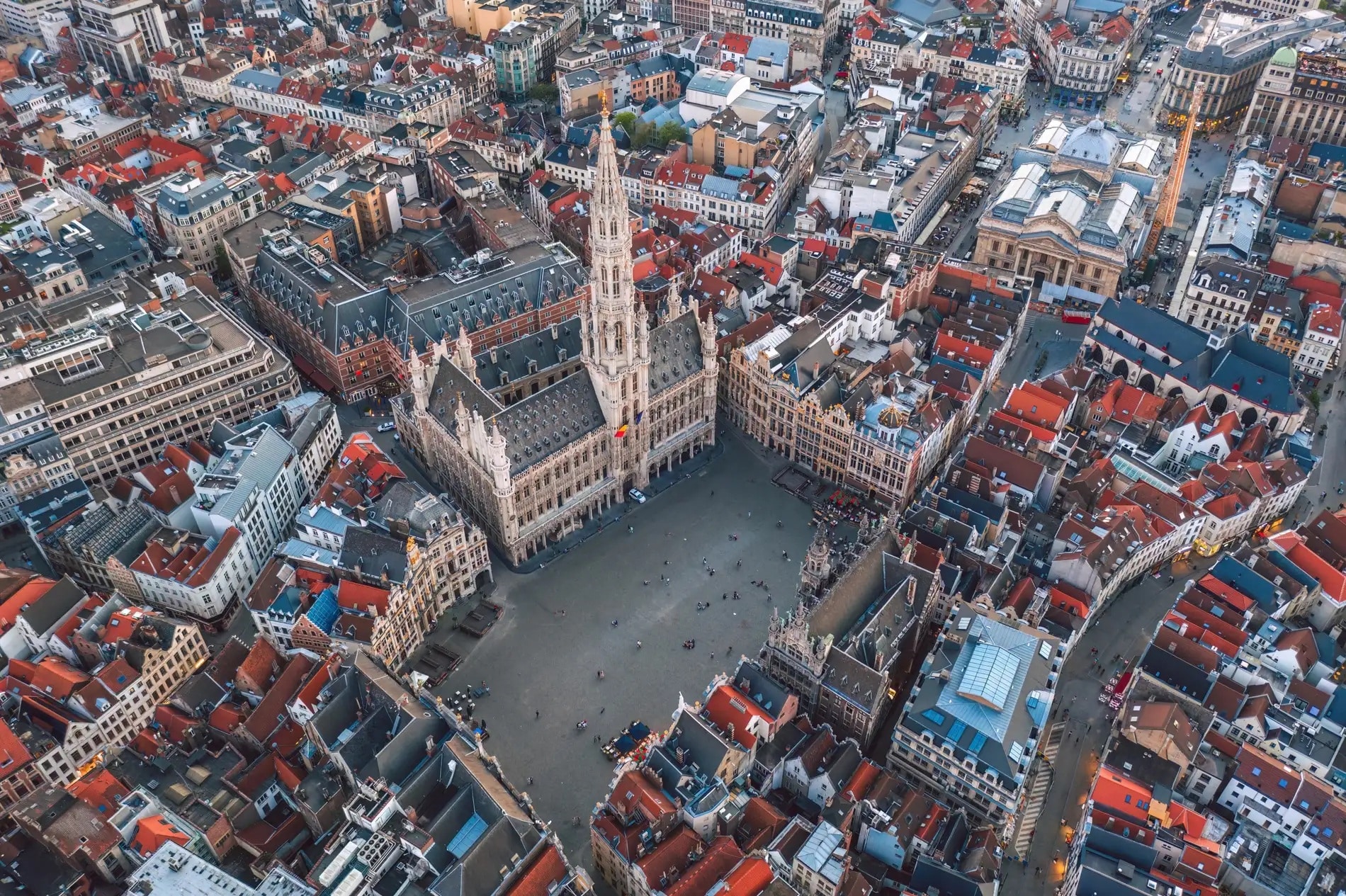
Listed as a UNESCO World Heritage Site since 1998, the Grand Place in Brussels is often described as one of the most beautiful squares in the world. Surrounded by richly decorated guild houses, the Gothic Town Hall and the King’s House (Museum of the City of Brussels), it is the ideal starting point for any visit to the capital.
Here families , tourists, locals, festivities, events, Christmas markets, flower carpets, sound and light shows… Day and night, it is a place to see, to see again, and above all to experience.

We like
- Sit in the center of the square and make the children turn on themselves to admire the facades (“wow” effect guaranteed, especially at night).
- Be able to easily go to Grand-Place → Manneken Pis → Royal Galleries → Mont des Arts.
- The double reading : postcard for children, but also places of history (1695, corporations, municipal power) for teenagers and adults.
- The fact that the Grand-Place remains a lively square, where the local population mixes with tourists during major events.
A little history to tell the children
- The first mentions of the Grand-Place date back to the twelfth century : it was then the “Nedermarckt”, the “lower market”, installed on a former dry swamp in the Senne valley.
- In the Middle Ages, the heart of municipal power was established here with the construction of the Town Hall (15th century) and patrician stone houses.
- Between the sixteenth and seventeenth centuries, the guilds (brewers, bakers, cabinetmakers, etc.) rebuilt their houses in Renaissance and Baroque styles, with gables, statues and gilding.
- In August 1695, the square and the centre of Brussels were bombarded by Louis XIV’s troops : almost all the houses were destroyed, only the walls of the City Hall and a few stone elements remained.
- In less than 4 years, the Grand-Place was rebuilt by the guilds according to strict rules: the facades had to be validated by the City Magistrate, which explains the current harmony, despite the diversity of styles.
It is this spectacular reconstruction, after one of the worst bombings of the time, that earned the Grand-Place its UNESCO listing: it symbolises the pride and resilience of the people of Brussels.
What is a must-see on the Grand-Place?
The Town Hall
A Gothic building built in the fifteenth century, the Town Hall is recognizable by its 96 m tower surmounted by the archangel Saint Michael, patron saint of the city.
Namely:
- it was badly damaged in 1695, but its walls and tower survived;
- Its ceremonial rooms house tapestries, woodwork and history paintings (guided tours possible on certain days).
The King’s House / Museum of the City of Brussels
Opposite the City Hall, the King’s House (or “Broodhuis”) houses the Museum of the City of Brussels.
It includes:
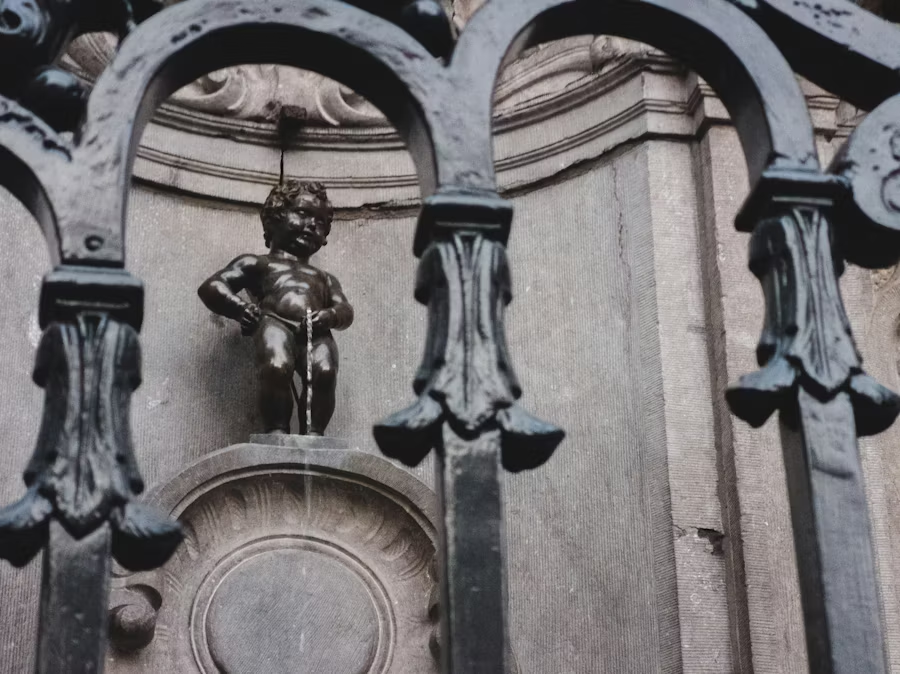
- the original statue of Manneken Pis (the one on the street is a copy);
- models, paintings, objects and documents that tell the story of Brussels and the Grand-Place;
- temporary exhibitions around architecture, folklore, etc.
The Houses of the Guilds
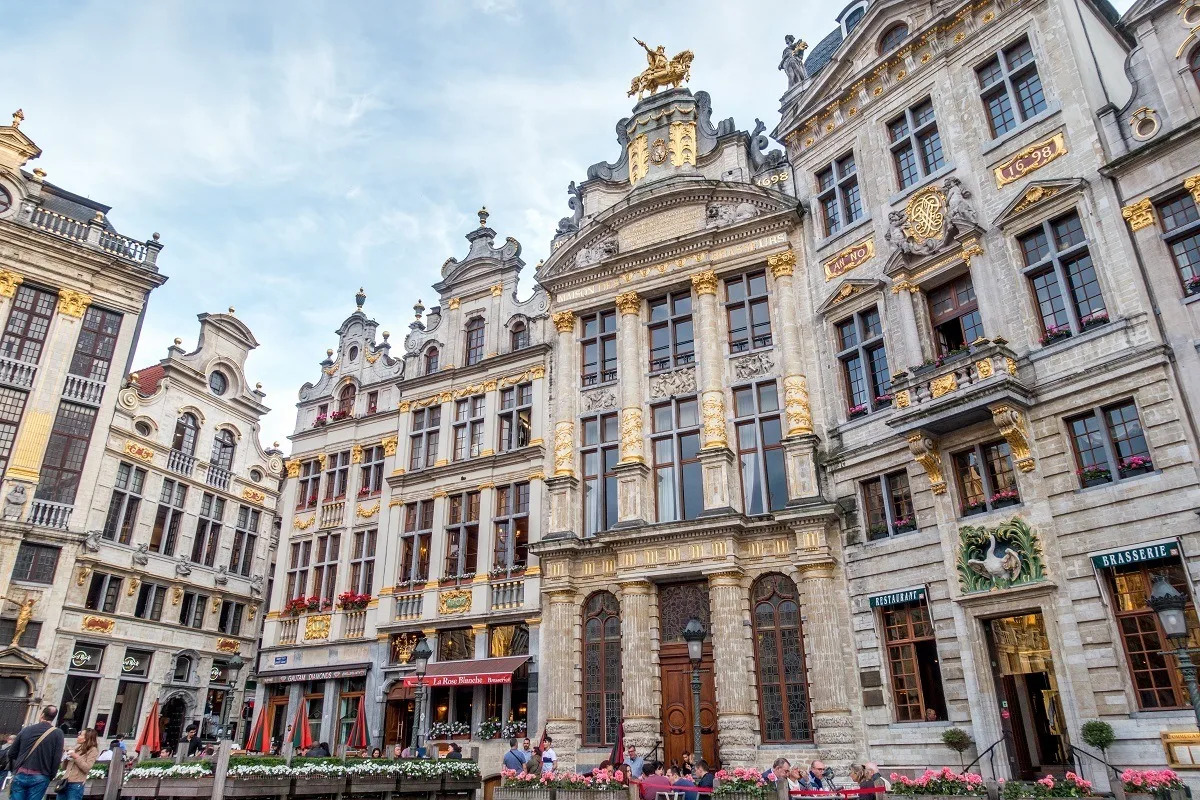
All around the square, the facades still bear the names and symbols of the old guilds :
- The King of Spain (bakers’ house) with his statue of Charles II;
- The Maison des Brasseurs, now occupied by the Brewers’ Federation (and formerly a beer museum);
- The House of the Dukes of Brabant, a set of seven facades gathered behind the same front;
- The she-wolf, the cornet, the fox… with gables, gilding, allegorical statues.
It’s a fun game with children: spotting details (boats, wolves, trade symbols, etc.) on the facades.
Major events on the Grand-Place during the year
The Grand-Place is not just a set: it is an open-air stage. Throughout the year, it hosts major events:
📅 All year round
Concerts, festivals and entertainment
The Grand Place is regularly used as a backdrop for concerts, festivals, award ceremonies, official events and folklore celebrations.
📅 Early Summer
The Ommegang
A great historical re-enactment in costumes: a parade, a procession and a show reminiscent of Charles V’sentry into Brussels in 1549.
📅 August (every 2 years)
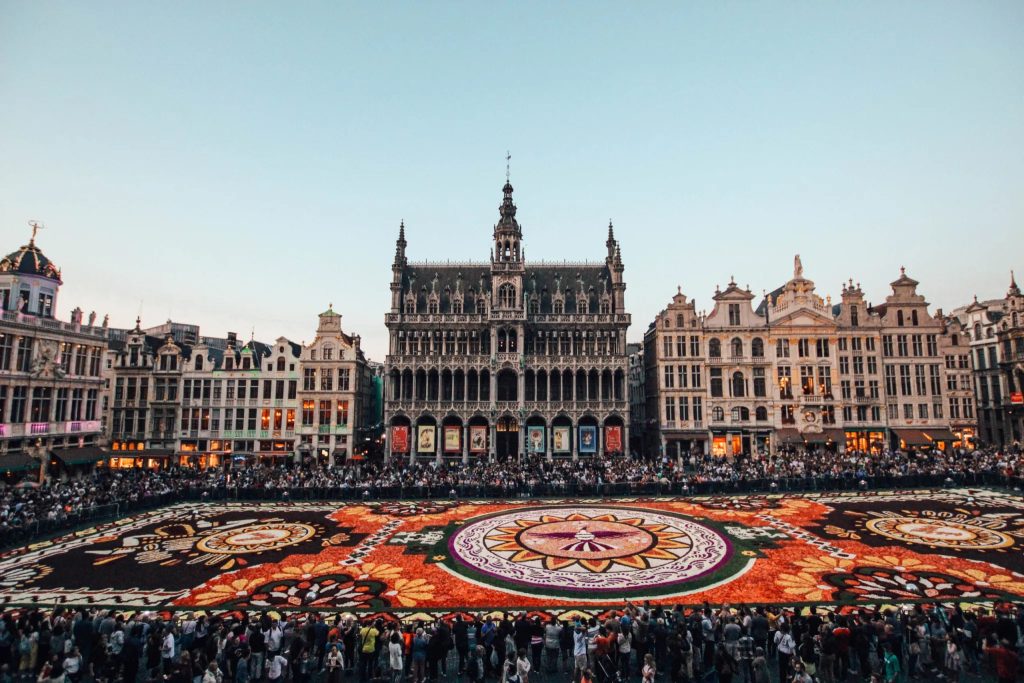
The Flower Carpet
A carpet of begonias measuring 77 x 24 m covers the centre of the square for a few days. Spectacular view from the ground… and even more beautiful from the balconies of the Hôtel de Ville.
📅 End of August
The Meyboom
Brussels tradition classified as intangible heritage: procession, symbolic planting of a tree (“the tree of joy”), music and folkloric atmosphere throughout the city centre.
📅 End of November – December
Large Christmas tree & light show
The Grand-Place is transformed: a huge Christmas tree, a nativity scene, a sound and light show projected on the facades. This is the heart of the end-of-year atmosphere in Brussels, not to be missed with children.
A stone’s throw from the Grand-Place, you will also like…
MANNEKEN PIS & HER WARDROBE
Less than 5 minutes walk down the rue de l’Étuve, you come across Manneken Pis, the famous little fountain that makes children laugh. Take the opportunity to stop by the Manneken Pis Wardrobe, the museum where his costumes from around the world are exhibited. A perfect mini-visit to do before or after the Grand-Place.
MUSEUM OF THE CITY OF BRUSSELS (KING’S HOUSE)
On the Grand-Place itself, the King’s House houses the Museum of the City of Brussels. You can discover the history of the city, models, old objects… and especially the original by Manneken Pis, preciously preserved inside. Ideal to complete the visit of the square with a more cultural component.
GALERIES ROYALES SAINT-HUBERT
A few minutes’ walk away, the Galeries Royales Saint-Hubert offer a very pleasant covered promenade: chocolatiers, bookshops, cafés, theatre… It is the ideal break in rainy or cold weather, or simply to extend the walk in an elegant setting.
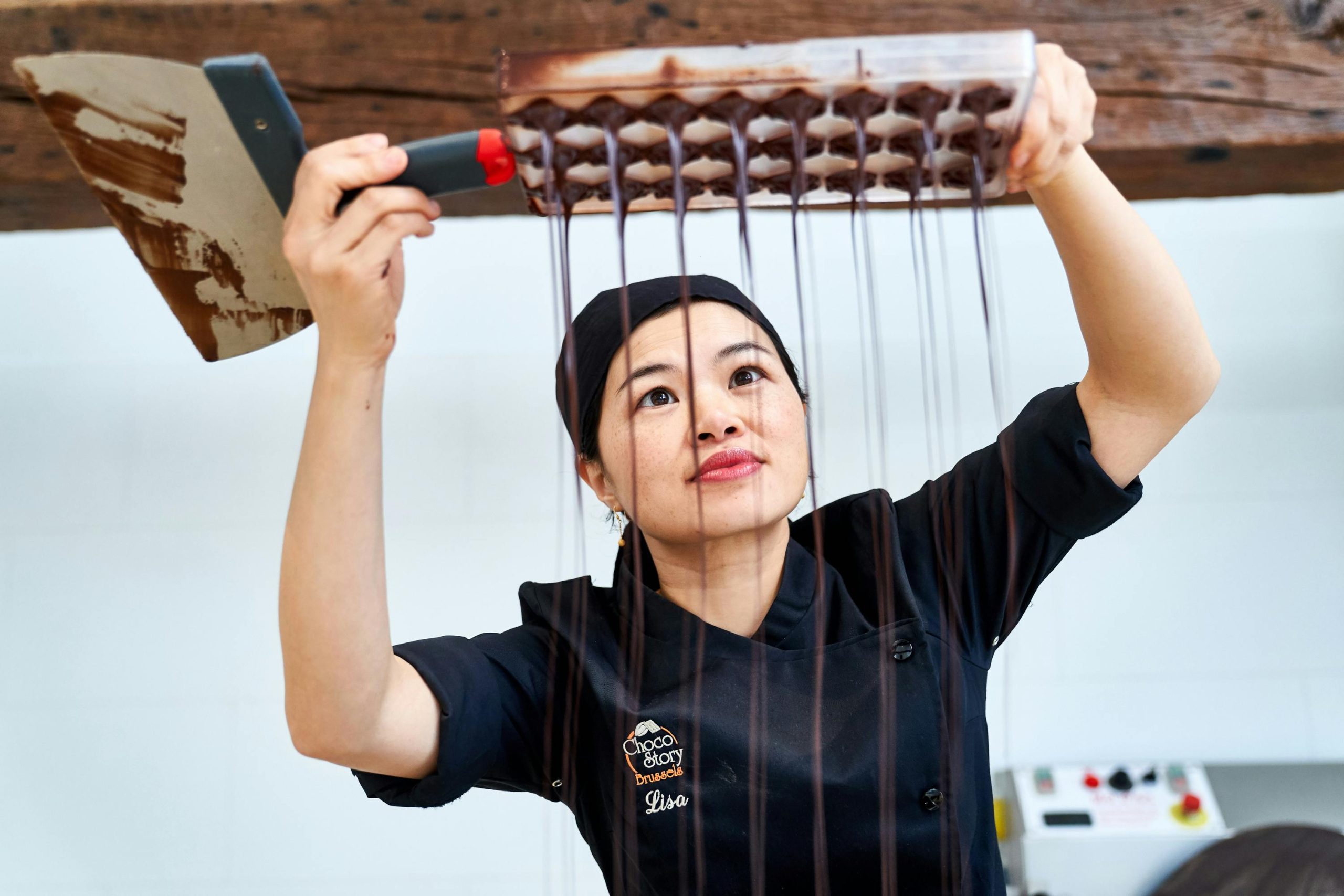
CHOCOLATE MUSEUM – CHOCO-STORY BRUSSELS
Between the Grand-Place and Manneken Pis, Choco-Story Brussels tells the story of Belgian cocoa and chocolate, with a demonstration by a master chocolatier and tasting. A gourmet visit that combines perfectly with a visit to the Grand-Place.
Practical information
AGE :
The discovery of the Grand-Place is accessible to all ages. The little ones enjoy the décor and the atmosphere; from the age of 7–8, you can start telling the story of the guilds, the bombing and UNESCO.
DURATION :
- Single pass + photos: 20–30 minutes.
- More complete discovery (City Hall + City Museum + walk in the adjacent streets): allow 2 to 3 hours.
📍 LOCATION :
Grand-Place de Bruxelles, 1000 Brussels – pedestrian zone in the “Lower Town”, a few minutes walk from the Central Station.
DATES & TIMES :
- The square is accessible 24 hours a day, 7 days a week, free of charge.
- The City Museum (Maison du Roi) is open from Tuesday to Sunday, 10 a.m. to 5 p.m., closed on Mondays and certain public holidays.
- The Town Hall can only be visited by guided tour, at specific times and dates (check on the official website or Visit Brussels).
ACCESS :
- On foot : 5 minutes from Central Station or De Brouckère station.
- Public transport : metro lines 1 & 5 (Gare Centrale / De Brouckère), tram 3–4–7–10 (Bourse or De Brouckère), buses 29, 33, 46, 48, 66, 71, 95 depending on the stop.
ACCESSIBILITY :
- The Grand-Place is paved and can be a little uncomfortable with a stroller or wheelchair, but remains generally accessible.
- The City Museum announces “autonomous” accessibility for people with reduced mobility; For specific needs, it is better to check the official information or contact them.
Frequently Asked Questions
Yes. Even the little ones appreciate the facades, the lights and the atmosphere. For the older ones, we can tell the story of the 1695 bombardment, the corporations, UNESCO, and have them look for details on the facades (animals, symbols, gilding…).
Count on:
20–30 minutes for a single pass and photos;
2–3 hours if you add a visit to the City Museum, a tour of the surrounding alleys, Manneken Pis and possibly a chocolate or a waffle.
Most of the facades date from the reconstruction after 1695, sometimes restored in the nineteenth century. The whole very faithfully reflects the square as it appeared at the beginning of the eighteenth century, which explains its UNESCO classification.
Yes, but only on a guided tour, at specific times. Tours are organized by the City or by tour operators (often in several languages). We advise you to book in advance, especially during holidays and weekends.
To avoid the crowds : early in the morning or late in the evening.
For the atmosphere: at nightfall, when the facades are illuminated.
For an “exceptional” moment: during the Flower Carpet, Christmas festivities or a big event (Ommegang, concerts…).
Brussels, comics and chocolate


A bit of culture
La culture sos toute ses formes : des musées à faire découvrir aux enfants, des visites guidées thématiques pour mieux comprendre Bruxelles, les quartiers incontournables à faire à pied